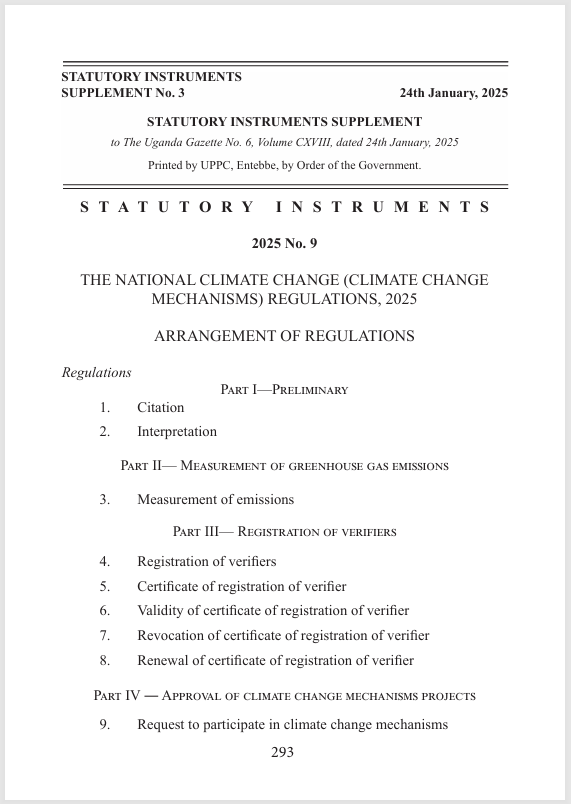
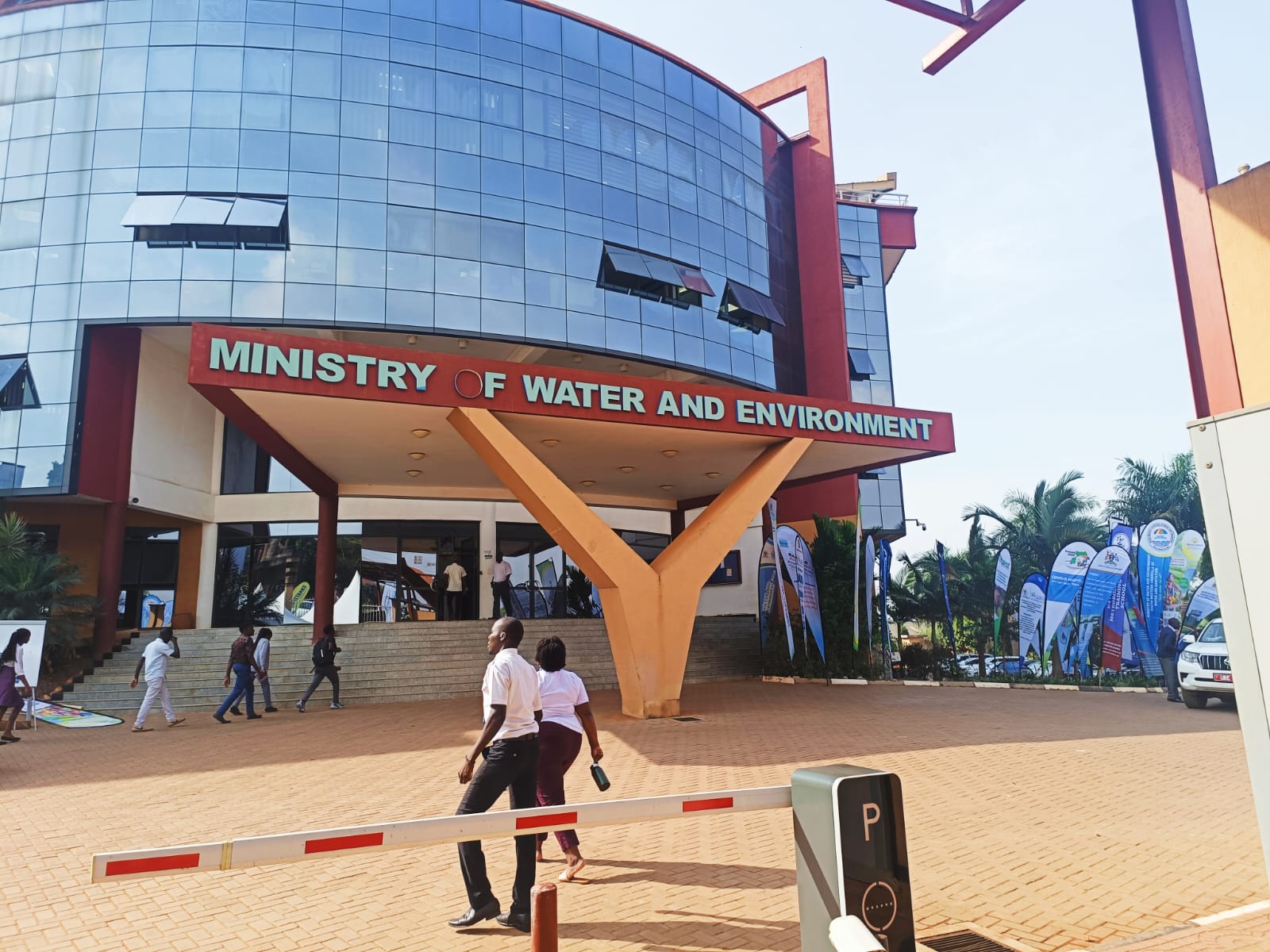
MWE Headquarters

Publications & Documents

289 publications found
Economic Study for water and environment sector-Uganda Factsheet A4

Results of a national integrated bio-physical/economic modeling framework show that from 2015 to 2040 enhanced investment by the Ministry of Water and Environment (MWE) in Water Resource Development and Environmental Management can increase per capita GDP by 9% in 2040. Water resource development investments contribute 45% of this increase, while wetland protection and land management investments (especially efforts to switch away from firewood for cookstoves) yield 55% of the total benefit.

• 0.29 MB
Download • 386 downloads
Economic Study 2018-Contribution of Water Development and Environment Resources to Ugandas Economy

The study is a partnership between the Industrial Economics (IEc) expert team and staff, the Ministry of Water and Environment (MWE) team, and other local counterparts in Uganda. From the government of Uganda, we are grateful for policy guidance and technical support provided by the Ministry of Water and Environment, the Ministry of Energy and Minerals Development, the Ministry of Finance, Planning and Economic Development, the Nile Basin Initiative, and to the study focal points within these Ministries whose participation made this study possible.

• 1.14 MB
Download • 408 downloads
Water Governance Newsletter

The Ministry of Water and Environment (MWE) and the water and environment sector in general is increasingly prioritizing governance activities through its Good Governance Working Group. This year, the sector has prioritized the development of a good governance indicator to be used in measuring and monitoring of processes the sector undergoes in service delivery.

• 1.19 MB
Download • 390 downloads
ENR GENDER STRATEGY 2016 -2021

’Women play an essential role in the management of natural resources, including soil, water, forests and energy and often have a profound traditional and contemporary knowledge of the natural world around them’’ (World Bank).However, attention needs to be paid on the differential cause and effect of environmental degradation on men and women; and importantly, the role of women as agents of change in mitigation and adaptation to the changing environment. It is very true that men and women use resources differently and have different roles in society. However, in order to be effective, strategies to preserve and sustain the environment should pay close attention to the impact of the disparities between women and men’s access to environmental and natural resources and opportunities.

• 1.04 MB
Download • 436 downloads

This volume is a product of the staff of the International Bank for Reconstruction and Development/ The World Bank. The findings, interpretatioand conclusions expressed in this paper do not necessarily reflect the views of the Executive Directors of The World Bank or the governments threpresent. The World Bank does not guarantee the accuracy of the data included in this work. The boundaries, colors, denominations, and otinformation shown on any map in this work do not imply any judgment on the part of The World Bank concerning the legal status of any territory the endorsement or acceptance of such boundaries.

• 0.88 MB
Download • 448 downloads