
Arua, Uganda – 05.11.2025 – Once known for their destructive sand mining activities in the Enyau wetland within the Ezuku Forest Reserve, a group of 20 youth from Orivu village, Ezuku Parish, Vurra Sub-County, have transformed into passionate protectors of nature.
The Orivu Sand Mining Group, previously one of the key drivers of degradation in the Ezuku wetland ecosystem, is now at the forefront of restoration efforts under the “Reducing Climate Change Vulnerability of Local Communities through Ecosystem-Based Adaptation (EbA) in Forest and Wetland Ecosystems Project.”
Implemented by the Ministry of Water and Environment (MWE) with support from the United Nations Environment Programme (UNEP) and partners, the project aims to reduce local communities’ vulnerability to climate change by promoting ecosystem-based adaptation in wetlands and forest landscapes across Uganda.
From Sand Miners to Conservation Champions
For years, uncontrolled sand mining in Ezuku Forest Reserve has caused extensive degradation, threatening biodiversity, water quality and local livelihoods. To reverse this trend, the EbA project, working with the Forestry Management Department (FMD) and the Arua District technical team facilitated multiple stakeholder engagement meetings that led to the successful re-opening of 7,299.2 meters of forest boundary, reclaiming 56.8 hectares (142 acres) of forest land for restoration.
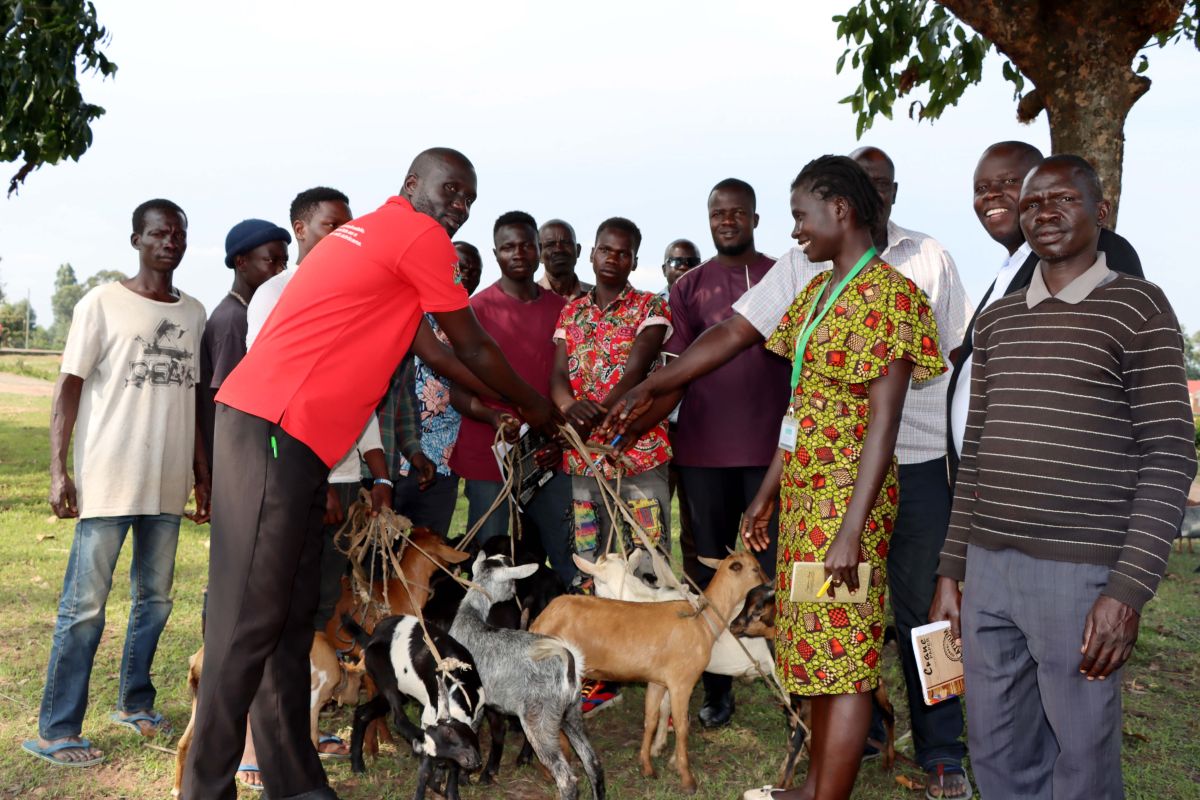
Recognising that environmental restoration must go hand-in-hand with livelihood support, the project identified the Orivu sand miners as key stakeholders to engage and rehabilitate so the group was offered an alternative livelihood package. Taking advantage of the abundant vegetation within the restored forest area, the group selected goat rearing as their preferred enterprise and were supported with 10 goats (8 females and 2 males) from the EbA project.
During a UNEP field monitoring visit, the group proudly reported an additional 12 goat kids, bringing their total to 22 goats in less than 6 months - a tangible sign of success for their new sustainable livelihood.
“We used to earn from destroying nature, but now we earn from protecting it,” said the Chairperson of Orivu Sand Mining Group. “The goats have given us hope, purpose and our forest is coming back to life.”
Restoring Ezuku: A Forest Reborn
With seedlings provided by the project, the group has helped restore the entire 56.9 hectares of the reclaimed Ezuku forest area through reforestation and backfilling of sand mining pits. Once barren and scarred by open borrow pits, the area is now covered with young trees and regenerating vegetation.
The former sand miners have become ambassadors of conservation, demonstrating how providing alternative and sustainable sources of income can transform environmental degraders into ecosystem stewards.
“The success of the Orivu group is a testament to the power of community-led restoration,” said a UNEP field officer. The officer further added that, when livelihoods and conservation go hand in hand, the environment and people both win.
Building Long-Term Sustainability
To ensure lasting impact and financial stability, the group has requested additional skills training in metal fabrication and welding through the Ministry and the EbA project. This will help them diversify income sources and resist the lure of unsustainable practices such as sand mining.
In addition, project teams advised the group to venture into beekeeping within the restored forest to capitalise on the abundant nectar, shade and water resources in Ezuku. Bee products such as honey and propolis will not only provide extra income but also encourage the group to maintain healthy forest cover.
A Model for Community Transformation
The transformation of the Orivu Sand Mining Group demonstrates that with targeted support, inclusive engagement and sustainable livelihood options, communities once associated with environmental degradation can become powerful agents of restoration.
Through the EbA project, the Ministry of Water and Environment together with UNEP are helping Ugandan communities like Orivu restore degraded ecosystems, build climate resilience, secure a greener and more sustainable ecosystem for future generations to come