We are committed to ensuring sustainable management of Uganda's water and environment resources for the benefit of present and future generations. Our mission is to promote and ensure the rational and sustainable utilization of water and environment resources for socio-economic development.
Our Mission Statement:
To promote efficient and effective utilization of water and environment resources for a healthy, wealthy and climate resilient population
Vision Statement:
Transformed Ugandan Society with environment and natural resources sustainably managed.
August 8, 2024 – Kabarole District: The Ministry of Water and Environment has officially launched an ambitious watershed management and nature-based conservation project aimed at safeguarding the Mpanga catchment area, which spans approximately 5,200 km² across the districts of Kabarole, Kyenjojo, Kitagwenda, Kamwenge, Kazo, Ibanda, Mbarara, and Kiruhura. This project is set to play a pivotal role in addressing pressing environmental challenges, including wetland encroachment, river bank degradation, and pollution, as identified in the Mpanga Catchment Management Plan (CMP) completed in 2015.The CMP has been actively implemented by both government and non-government actors under the leadership of the Directorate of Water Resources Management through the Albert Water Management Zone (AWMZ) since 2015. With a fresh injection of funding from the Conrad N. Hilton Foundation, the Ministry is poised to intensify efforts in watershed management and nature-based water conservation activities within the Mpanga catchment.The project launch, held in Fort Portal Tourism City, Kabarole District, was graced by the Director Water Resources Management, Dr Callist who represented the Minister of Water and Environment and who delivered an inspiring speech. “It is my honor and privilege to be with you today at the launch of this transformative initiative, made possible through the generous support of the Conrad N. Hilton Foundation,” the Minister began. “This project marks a significant milestone for sustainable water management and environmental stewardship in the Mpanga Catchment.”Project Goals and ObjectivesThe primary goal of this project is to bolster the implementation of the Mpanga Catchment Management Plan by enhancing the capacity of the AWMZ and Catchment Management Organizations (CMOs). Specific objectives include:Building the capacity of catchment management organizations to improve institutional processes, planning, and management through targeted training programs.Strengthening the AWMZ staff’s ability to coordinate activities through enhanced skills in work planning, monitoring, and conducting technical tests to ensure effective implementation.Supporting the restoration and implementation of priority conservation measures within the catchment.Positioning the AWMZ as a model for catchment-based water resources management by promoting institutional cooperation and disseminating success stories from the Mpanga catchment.Project Timeline and FundingThe project is slated to run for three years, from June 2024 to June 2027, with a total budget of 1.395 million USD, generously provided by the Conrad N. Hilton Foundation. The Ministry of Water and Environment will lead the project, collaborating closely with key partners such as Water for People and Join for Water, along with additional consultancy firms to be procured by the Ministry.Anticipated BenefitsThe project is expected to yield significant environmental and institutional benefits, including:Restoration of degraded landscapes through afforestation on both private and public lands.Restoration and demarcation of wetland systems and their buffer zones.Establishment of soil and water conservation structures.Installation of a mini weather station within the Mpanga catchment.Construction of a hydro-monitoring station at the Mpanga catchment outlet.Capacity building for the Mpanga Catchment Management Organization (CMO) to enhance its operational effectiveness.The Minister highlighted the project’s focus on scaling up these efforts: “Today, we embark on a journey to scale up the implementation of remedial catchment management measures in the Mpanga Catchment to safeguard our precious water and environmental resources for generations. This project will focus on data collection, wetland restoration, re-afforestation, and capacity development of the Catchment Management Organization.”As the project officially gets underway, it marks a significant step forward in the sustainable management of the Mpanga catchment, ensuring the protection and conservation of vital water resources for the communities and ecosystems that depend on them.The Minister concluded by expressing gratitude to the partners involved: “I appreciate the Water For People team working tirelessly with the Ministry staff in drafting the project proposal. I also acknowledge Join For Water for their support in the preparatory meetings.”The launch event was attended by key stakeholders, including district chairpersons, resident district commissioners, chief administrative officers, representatives from civil society organizations, the private sector, religious institutions, and the media.This ambitious project underscores the Ministry of Water and Environment’s commitment to sustainable environmental management and its role in contributing to global climate change mitigation efforts.
LGFSsThe Ministry of Water and Environment is actively implementing and expanding its program for Large Gravity Flow Schemes across Uganda. This strategic approach to water supply development leverages Uganda’s natural topography, particularly in hilly and mountainous regions, to deliver safe, clean, and reliable piped water to communities without the need for energy-intensive pumping. By harnessing the natural force of gravity, these schemes offer a sustainable and cost-effective solution for increasing water access, improving public health, and reducing the burden of water collection, particularly for women and children in rural and peri-urban areas.Key Objectives of the Program:The Large Gravity Flow Schemes program aims to achieve several critical objectives:Increase Access to Safe Piped Water: To significantly expand the percentage of the population with sustainable access to safe and readily available piped water, especially in geographically challenging terrains where conventional motorized systems might be impractical or costly.Ensure Reliable and Sustainable Water Supply: To provide communities with a continuous and dependable flow of water throughout the year, utilizing perennial high-altitude water sources.Optimize Cost-Effectiveness and Sustainability: To reduce the operational and maintenance costs associated with water supply by minimizing or eliminating the need for pumps, thereby ensuring the long-term viability of the schemes.Improve Health, Sanitation, and Hygiene: To contribute directly to better health outcomes by providing clean water for drinking, cooking, and domestic hygiene, reducing the incidence of waterborne diseases.Reduce Distances to Water Sources: To bring water closer to households, schools, and health centers, saving communities significant time and effort previously spent on fetching water from distant or unsafe sources.Promote Environmental Protection: To ensure the protection and sustainable management of the water sources and their catchment areas, safeguarding the quantity and quality of water for future generations.Project Scope and Typical Activities:The implementation of Large Gravity Flow Schemes involves a comprehensive set of activities:Feasibility Studies and Source Identification: Thorough technical and social assessments to identify perennial springs, rivers, or other suitable water sources at higher elevations.Intake Structure Construction: Building robust intake structures at the water source to abstract water efficiently while protecting its quality.Transmission Pipeline Laying: Installation of extensive main pipelines, often spanning many kilometers, to convey water from the intake to storage reservoirs, utilizing gravity.Reservoir and Break-Pressure Tank Construction: Building strategically located reservoirs (storage tanks) and break-pressure tanks to manage water flow, maintain pressure, and ensure sufficient storage capacity.Distribution Network Development: Establishment of a network of secondary pipelines to distribute water from the reservoirs to various communities.Public Water Point (Standpipe) and Household Connections: Installation of public standpipes in accessible locations and facilitating private household connections where feasible.Water Source Protection: Implementing measures such as fencing, tree planting, and community sensitization to protect the integrity of the water source and its immediate catchment.Community Mobilization and Capacity Building: Engaging local communities, forming Water and Sanitation Committees (WSCs), and providing training on scheme operation, maintenance, and financial management to ensure local ownership and sustainability.Expected Impact and Benefits:The Large Gravity Flow Schemes program is expected to bring transformative benefits to beneficiary communities:Enhanced Water Coverage: A significant increase in the number of people with access to safe and reliable water, particularly in challenging terrains.Improved Public Health: A noticeable reduction in waterborne diseases due to the availability of clean water.Time and Labor Savings: Freeing up valuable time, especially for women and girls, which can be re-allocated to education, economic activities, and other productive endeavors.Economic Empowerment: Creating opportunities for small-scale agriculture and other enterprises due to reliable water access, and reducing healthcare expenditures.Environmental Sustainability: Promoting eco-friendly water supply solutions with minimal energy requirements and fostering responsible water resource management.This ongoing program is a cornerstone of Uganda’s commitment to achieving national water security and contributing to the Sustainable Development Goals (SDGs), particularly SDG 6 on Clean Water and Sanitation.Bukedea GFS Revised RAP ReportBukedea District is water stressed and lies within the flood zone and hence faces a major challenge of increasing access to clean and safe water to its rapidly growing population amidst diminishing water resources both in quantity and quality. Ground water resourceshave proved inadequate to meet the district’s potable water demand.
The EU-TF (SPRS-NU) Support Programme to the Refugee Settlements and Host Communities in Northern Uganda is a multifaceted initiative established under the European Union Emergency Trust Fund for Africa. Its primary objective is to address the humanitarian and developmental needs of South Sudanese refugees and their host communities in Northern Uganda, particularly in response to the significant influx of refugees since July 2016. The project aims to move beyond emergency aid towards more sustainable solutions, fostering stability and reducing the risk of conflict between refugee and host populations.Overall Objective and Specific AimsThe overarching objective of SPRS-NU is to reduce the risk of violent conflict between host communities and refugees in the refugee-hosting districts of Northern Uganda. More specifically, the project aims to:Improve food security, nutrition, and livelihoods of both refugee populations and host communities in a sustainable manner, by enhancing local production and fostering economic exchanges.Improve inter-community dialogue at the local level and establish conflict prevention mechanisms to mitigate clashes between or within communities.Improve the level of education and increase medium to long-term economic opportunities for refugees and host communities, especially youth and women, through skills development and entrepreneurship support, contributing to better integration.Ensure sustainable access to safe water and improve environmental sanitation conditions in targeted settlements and host communities.Project ComponentsThe SPRS-NU project is structured around several key components, often implemented by different partners to achieve its comprehensive objectives:Livelihood and Labor Market Relevant Skills Development: Focuses on providing quality skills training, entrepreneurial guidance, and start-up kits for refugees and host communities, with a particular emphasis on youth, women, and girls. This includes vocational training and accreditation of acquired skills.Water, Sanitation, and Hygiene (WASH) Component: Concentrates on constructing and rehabilitating essential water supply systems (e.g., piped water systems), improving environmental sanitation through the construction of faecal sludge treatment plants, and establishing sustainable operation and maintenance structures for these facilities.Community Dialogue and Conflict Prevention: Aims to facilitate improved relations between refugees and host communities through dialogue mechanisms and the establishment of local conflict prevention initiatives.Basic Services and Education: Supports improved access to essential services like education, recognizing its role in long-term economic opportunities and integration.Key Activities and ProgressWithin the WASH component, the project has specifically targeted 12 settlements, including Alere, Nyumanzi, Maaji II, Olujobo, Ranch I, Ayelo, Maaji III, Pagirinya, Bidibidi Zone V, Eden, Afua, and Ariaze.The project has undertaken a range of activities to achieve its aims:Skills Development: Provision of technical vocational education and training (TVET) and entrepreneurship support, with thousands of beneficiaries receiving quality skills development and start-up kits.WASH Infrastructure: Construction of piped water supply systems and faecal sludge treatment plants, alongside geological and hydrological surveys and drilling of production wells in various settlements (e.g., Alere, Nyumanzi, Maaji II, Ranch I).Feasibility Studies and Designs: Ongoing detailed engineering designs for water and sanitation infrastructure in several settlements.Inter-Community Dialogue: Facilitating platforms for dialogue and conflict prevention.Mid-term Reviews: Periodic reviews (e.g., November 2023) assess project performance, coherence, efficiency, effectiveness, impact, and sustainability, providing insights for continuous improvement and learning.Impact and LegacyThe EU-TF (SPRS-NU) project has played a crucial role in addressing the complex challenges arising from large refugee populations in Northern Uganda. By focusing on both immediate needs and long-term development, it contributes significantly to:Enhanced Livelihoods: Equipping refugees and host communities with practical skills and entrepreneurial knowledge, thereby increasing their economic opportunities and reducing reliance on subsistence agriculture.Improved Social Cohesion: Mitigating potential conflicts by fostering better understanding and shared benefits between refugee and host communities.Access to Essential Services: Providing sustainable access to safe water and improved sanitation, which are fundamental for public health and environmental well-being.Sustainable Development: Laying a foundation for more resilient and self-reliant communities, aligning with Uganda’s Comprehensive Refugee Response Framework (CRRF) and broader development goals.While some components of the project have concluded their initial phases, the overall program’s integrated approach and its focus on sustainable solutions continue to inform and shape future interventions in refugee-hosting areas of Uganda.
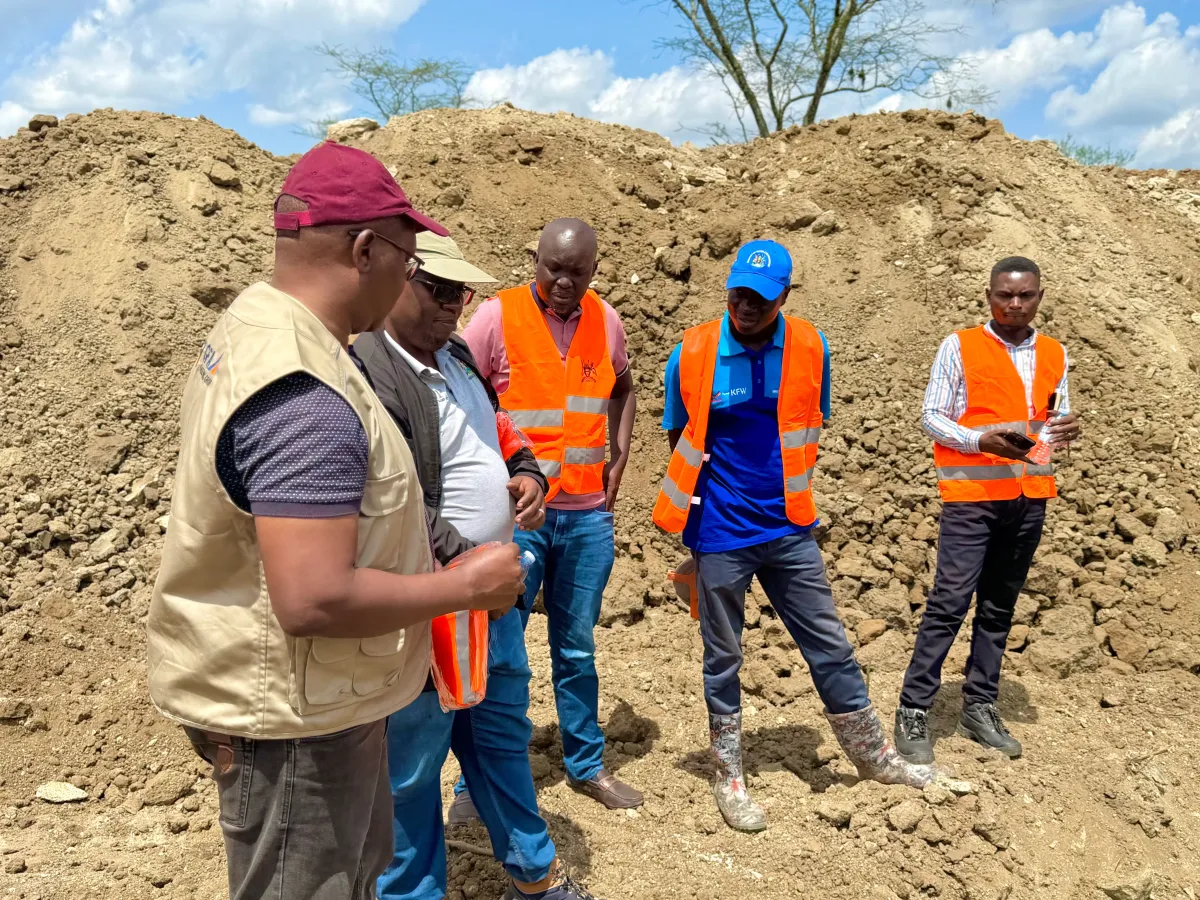
ABOUT FIEFOC-3The Government of Uganda through the Ministry of Water and Environment (MWE) is implementing the development of three- medium sized irrigation schemes in northern and eastern regions of Uganda, covering an irrigable area of 1,800 hectares. The irrigation schemes are developed at Unyama (700 ha) in Amuru and Gulu Districts, Sipi (400 ha) in Bulambuli District, and Namalu (700 ha) in Nakapiripirit District under a project code – named Farm Income Enhancement and Forest Conservation Programme – Project 3 (FIEFOC-3). The five –year public sector investment (2023-2028) was designed within the context of the Government of Uganda’s Third National Development Plan (NDP III) and the long –term development strategy, the Vision 2040 both of which promote agricultural infrastructure development, agro-industrialization and household incomes.The project was also designed following a successful completion of FIEFOC-1, which ended in December 2012 and FIEFOC-2 to be completed by December 2025 respectively. The contribution of FIEFOC-3 is hinged on water sector performance indicator that focuses on harnessing irrigation potential of Uganda for increased agricultural production and productivity and household incomes (Sustainable Development Goal 2), and improving access to Sustainable Water Systems (Sustainable Development Goal 6).PROJECT DEVELOPMENT OBJECTIVEThe project development objective is to contribute to poverty reduction and economic growth of Ugandathrough enhanced agricultural productivity and commercialization, thereby improving household incomes, food security and climate resilience through sustainable natural resources management and agricultural enterprise development.DEVELOPMENT PARTNERSThe key financiers of the project are the Islamic Development Bank (IsDB) with financial support of USD 86.5 million and Arab Bank for Economic Development in Africa (BADEA) with USD 15.0 million with counterpart funding from the Government of Uganda of USD 10.62 million, totaling USD 112.12million. The project is jointly implemented by the MWE and the Ministry of Agriculture, Animal Industry and Fisheries (MAAIF).PROJECT LOCATIONThe project is implemented in the northern and eastern regions of Uganda, where three irrigation schemes are developed: Unyama in Amuru and Gulu Districts, Namalu in Nakapiripirit District and Sipi in Bulambuli District. Activities under the Integrated Natural Resources Management (INRM) and Agribusiness Development (AbD) Components are implemented across 19 districts within the project catchment areas.PROJECT COMPONENTSThe four major project components include:Agricultural Infrastructure DevelopmentAgribusiness DevelopmentIntegrated Natural Resources ManagementProject Management and CoordinationOther components include Project Finance, Project Steering Committee and Technical Team inspecting proposed site of Sipi Irrigation Scheme in Bulambuli District 3 Auditing, and Contingency Emergency Response (CER) , thus making a total of 7 project components.PROJECT DESCRIPTIONAgriculture Infrastructure Development (AID) component focuses on implementation of three major sub-components. These include:Irrigation infrastructure developmentSustainable management of irrigation schemes through establishments of Farmer Based Organizations (FBO)Irrigated agronomy, as well as soil and landimprovements for training farmers on modern agricultural practices.Agribusiness Development (AbD) component focuses on (i) value chain support including marketing, agribusiness needs assessment, scoping surveys, promotion of horticulture and aquaculture in irrigation schemes and catchment areas; (ii) training offarmer groups, individual farmers and community-based organizations on commodity collective marketing, financing accessibility, agribusiness skills, food processing technologies, post-harvest handling and management; and (iii) training on sustainableutilization of crop value – addition equipment and establishment of demonstration plots for climate smart agricultural practices.Integrated Natural Resources Management (INRM) component focuses on interventions that target restoration of selected degraded lands and river banks within the irrigation catchment areas, depending on the level of deforestation and status ofenvironmental degradation. This means INRM activity is implemented in 19 districts located within the watershed of the river systems feeding the irrigation schemes as shown in Table 1 below:Table 1. Districts located within the catchment areas.Catchment Area | Districts | No. ofDistricts | Irrigation SchemeUnyama catchment | Adjumani, Amuru, Guluand Nwoya | 4 | Unyama Irrigation SchemeNamalu catchment | Moroto, Napak,Nakapiripirit, Nabilatuk,Katakwi, Soroti, NgoraKumi, and Amuria | 9 | Namalu Irrigation SchemeSipi Catchment | Amudat, Bukedea,Bukwo, Kapchorwa,Bulambuli, and Sironko. | 6 | Sipi Irrigation SchemeThe major project beneficiaries include communities living in degraded lands, farmersadopting agro-forestry practices and conservation farming, as well as technical stafftrained in sustainable conservation and tree planting.Project Management and Coordination (PMC) component provides resources for theestablishment and operations of project coordination unit based in Kampala, and regionalproject implementation units located at project areas; coordinate mid – term reviews,organize exposure visits for good practices in irrigation schemes management andbusiness model assessment of irrigation and drainage systems.Project Financial Audit Services provides financial audit services to the project, includingexamination of project financial expenditures, special accounts and bank statements. TheOffice of the Auditor General of Uganda is mandated by the Constitution of the Republicof Uganda to undertake financial audit of public funds. It will be in charge of auditing theproject either through its own resources or external independent auditing firms. Theproject audit year will be in accordance with the Government Budget Year.Contingency Emergency Response Component is embedded as a stand – alonecomponent. The component comes into force when there is an emergency during projectimplementation and the Government wishes to reallocate funds in accordance with theBank’s procedures.Table 2. Key Result Framework IndicatorsNo. | Outcome Indicators (2028) | Measure1 | Percentage increase in number of farmers applyingadvanced irrigation techniques | 0 -50%2 | Percentage increase in yields of major crops | 25-50%3 | Percentage increase in improvement of rural householdincomes. | 25-50%4 | Percentage increase in farmers’ incomes. | 0 (U$788) – 32% (USD 1039)5 | Percentage increase in water efficiency for secondarycanals. | 50-70%6 | Percentage increase in water efficiency for tertiarycanals. | 45-80%7 | Number of small medium enterprises established andpromoted. | 328 | Output Indicators (2027) | 1 | Number of medium sized irrigation schemes constructedin northern and eastern regions. | 32 | Total area of land developed under 3 irrigation schemesat Unyama (Amuru and Gulu districts), Namalu(Nakapiripirit district), and Sipi (Bulambuli district). | 2900 ha3 | Length of irrigation and drainage canals constructed | 360 km4 | Number of machineries provided per scheme | 7 met stations, 7 office blocks, 10 tractors, 8 backhoes and 4excavators5 | Number of gender responsive Farmer BasedManagement Organizations (FBMO) / Water UserAssociations (WUA) established. | 8 (30% women and 10% youth)6 | Number of farmers trained in entrepreneurship, businessskills, value addition and post – harvest handlingtechnologies. | 15,2007 | Number of farmers linked to markets | 12,7008 | Number of trees plants (seedlings) distributed to farmers. | 11 million9 | Number of project beneficiaries trained in naturalresources management. | 20,36010 | Number of districts under, which INRM catchmentactivities will be implemented. | 19
August 8, 2024 – Kabarole District: The Ministry of Water and Environment has officially launched an ambitious watershed management and nature-based conservation project aimed at safeguarding the Mpanga catchment area, which spans approximately 5,200 km² across the districts of Kabarole, Kyenjojo, Kitagwenda, Kamwenge, Kazo, Ibanda, Mbarara, and Kiruhura. This project is set to play a pivotal role in addressing pressing environmental challenges, including wetland encroachment, river bank degradation, and pollution, as identified in the Mpanga Catchment Management Plan (CMP) completed in 2015.The CMP has been actively implemented by both government and non-government actors under the leadership of the Directorate of Water Resources Management through the Albert Water Management Zone (AWMZ) since 2015. With a fresh injection of funding from the Conrad N. Hilton Foundation, the Ministry is poised to intensify efforts in watershed management and nature-based water conservation activities within the Mpanga catchment.The project launch, held in Fort Portal Tourism City, Kabarole District, was graced by the Director Water Resources Management, Dr Callist who represented the Minister of Water and Environment and who delivered an inspiring speech. “It is my honor and privilege to be with you today at the launch of this transformative initiative, made possible through the generous support of the Conrad N. Hilton Foundation,” the Minister began. “This project marks a significant milestone for sustainable water management and environmental stewardship in the Mpanga Catchment.”Project Goals and ObjectivesThe primary goal of this project is to bolster the implementation of the Mpanga Catchment Management Plan by enhancing the capacity of the AWMZ and Catchment Management Organizations (CMOs). Specific objectives include:Building the capacity of catchment management organizations to improve institutional processes, planning, and management through targeted training programs.Strengthening the AWMZ staff’s ability to coordinate activities through enhanced skills in work planning, monitoring, and conducting technical tests to ensure effective implementation.Supporting the restoration and implementation of priority conservation measures within the catchment.Positioning the AWMZ as a model for catchment-based water resources management by promoting institutional cooperation and disseminating success stories from the Mpanga catchment.Project Timeline and FundingThe project is slated to run for three years, from June 2024 to June 2027, with a total budget of 1.395 million USD, generously provided by the Conrad N. Hilton Foundation. The Ministry of Water and Environment will lead the project, collaborating closely with key partners such as Water for People and Join for Water, along with additional consultancy firms to be procured by the Ministry.Anticipated BenefitsThe project is expected to yield significant environmental and institutional benefits, including:Restoration of degraded landscapes through afforestation on both private and public lands.Restoration and demarcation of wetland systems and their buffer zones.Establishment of soil and water conservation structures.Installation of a mini weather station within the Mpanga catchment.Construction of a hydro-monitoring station at the Mpanga catchment outlet.Capacity building for the Mpanga Catchment Management Organization (CMO) to enhance its operational effectiveness.The Minister highlighted the project’s focus on scaling up these efforts: “Today, we embark on a journey to scale up the implementation of remedial catchment management measures in the Mpanga Catchment to safeguard our precious water and environmental resources for generations. This project will focus on data collection, wetland restoration, re-afforestation, and capacity development of the Catchment Management Organization.”As the project officially gets underway, it marks a significant step forward in the sustainable management of the Mpanga catchment, ensuring the protection and conservation of vital water resources for the communities and ecosystems that depend on them.The Minister concluded by expressing gratitude to the partners involved: “I appreciate the Water For People team working tirelessly with the Ministry staff in drafting the project proposal. I also acknowledge Join For Water for their support in the preparatory meetings.”The launch event was attended by key stakeholders, including district chairpersons, resident district commissioners, chief administrative officers, representatives from civil society organizations, the private sector, religious institutions, and the media.This ambitious project underscores the Ministry of Water and Environment’s commitment to sustainable environmental management and its role in contributing to global climate change mitigation efforts.
The Ministry of Water and Environment is committed to avoiding, minimizing, and mitigating adverse environmental and social impacts associated with its projects, as well as adopting a gender-sensitive and gender-equitable approach for all its projects.