
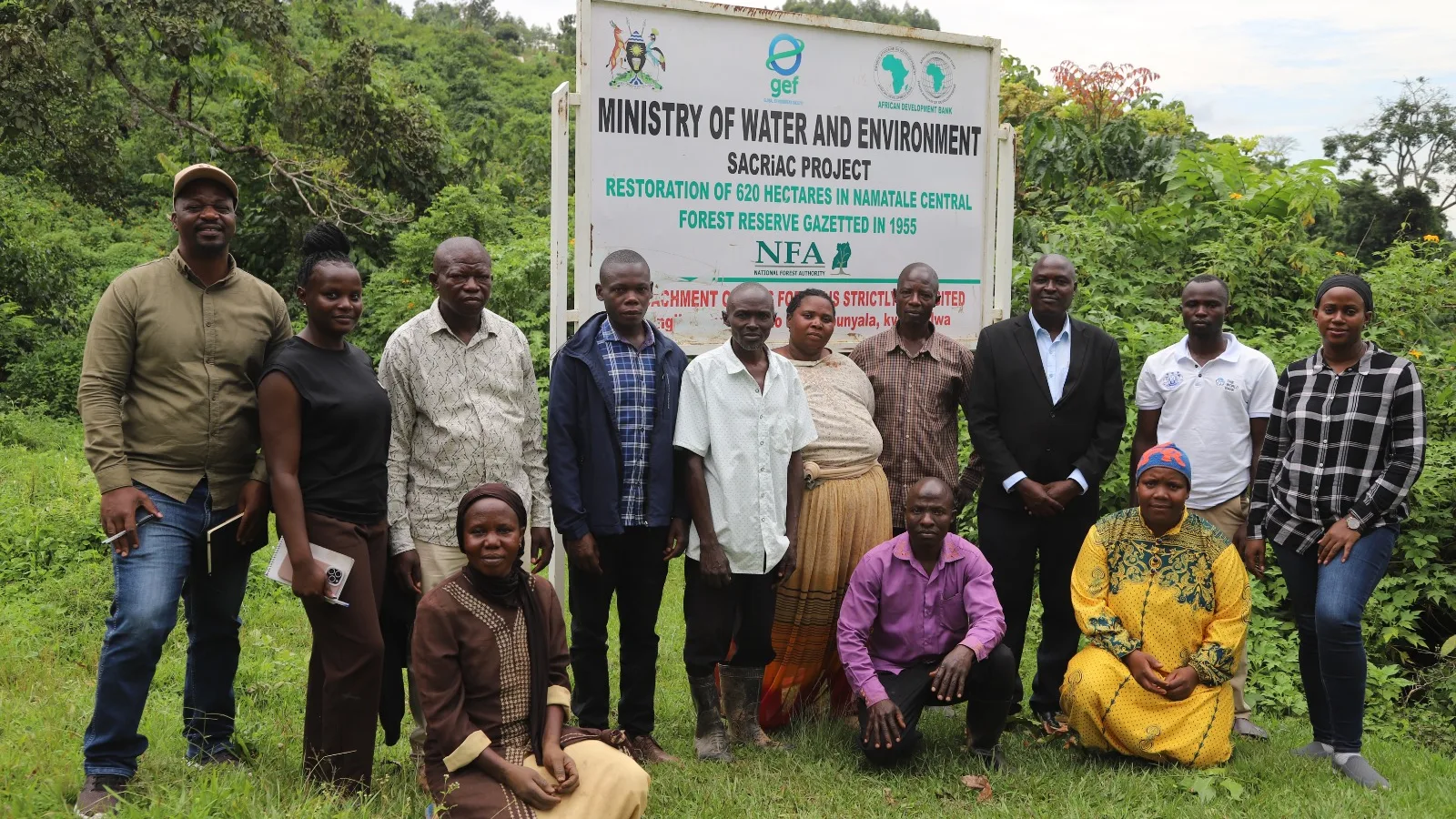
The Ministry of Water and Environment (MWE), through the Partnering for Forests Development (P4F) Project, is intensifying efforts to restore degraded forest ecosystems, secure forest boundaries and strengthen community participation in sustainable forest management across the Teso and Mt. Elgon sub-regions.
The initiative is targeting selected Central Forest Reserves and Local Forest Reserves in Soroti, Serere, Kalaki, Kaberamaido, Katakwi, Kumi, Ngora, Amuria and Bukedea districts in Teso, as well as Kibuku, Mbale, Bududa, Manafwa and Sironko districts in the Mt. Elgon sub-region.
Ahead of the restoration activities, the project has embarked on community sensitisation and stakeholder engagements, bringing together district leaders, technical officers and Community Forest Management (CFM) groups to prepare communities for forest boundary-opening, restoration of indigenous tree species and long-term protection of forest resources.
Michael Kusuro, Senior Forest Officer at MWE responsible for the Kyoga Range that covers Teso, Busoga, Bukedi and Bugisu sub-regions, said the initiative would strengthen relationships between communities and forest managers while promoting shared responsibility for forest conservation.
“Restoring our forests is not just about planting trees. It is about rebuilding trust, improving how communities value and use forest resources, and encouraging them to protect these resources for generations to come,” he said.
In Teso, the team identified Bukedea Central Forest Reserve, Kachumbala and Koreng Local Forest Reserves in Bukedea District for consideration. Engagements in Serere included visits to Omodoi Local Forest Reserve and Akimega–Agwata Central Forest Reserve, while discussions in Soroti and Katakwi focused on restoration priorities, resolving boundary concerns, preventing encroachment and strengthening community participation in forest protection.
Bob Owiny, Soroti District Local Council V Chairperson, called on district leaders and communities to support the initiative.
“District leadership must pave the way for this project to succeed. Communities should embrace it, participate actively and benefit from the restoration of their forests,” he said.
Similarly, in the Mt. Elgon sub-region, the project team engaged district leaders and community representatives, including ten CFM group leaders representing communities around Namatale Central Forest Reserve in Mbale District. Discussions explored potential livelihood opportunities such as apiary development, coffee growing and other forestry-related enterprises.
The team also visited Mutuufu and Kalonyi Local Forest Reserves in Mbale, as well as Bubulo and Busumbu Local Forest Reserves in Manafwa, while engagements in Sironko focused on strengthening community awareness, coordination and capacity for forest conservation.
Aldon Walukamba, P4F Programme Outreach Officer, said community sensitisation was critical in ensuring that people living around forest reserves understood the objectives of the project, their responsibilities and the opportunities available to them.
“Pre-restoration sensitisation has kicked off and is now cascading down to local communities. We want people living around these forest reserves to understand the importance of restoring natural tree species, their roles and responsibilities, and the opportunities available to them under the project,” he said.
Community representatives also welcomed the initiative, emphasising the importance of inclusive participation in forest restoration. Wanzala Sulayi, Chairperson of the Bufumbo Water and Environment Collaborative Forest Management Group, noted that the project came at an important time when urgent action was needed to restore tree cover and strengthen community involvement in forest management.
Nawire Azena, a member of the Bubyangu Community Forest Management Group, called for greater involvement of women in forest restoration planning and implementation, noting that women are equally affected by forest degradation and should have a meaningful role in decision-making and conservation efforts.
George Kaija, P4F Technical Support Officer, emphasised that securing forest boundaries and restoring indigenous tree species would be critical in recovering forest cover, protecting biodiversity and sustaining community livelihoods.
“The restoration of natural tree species will help safeguard the region’s biodiversity while supporting the livelihoods of communities that depend on forest resources,” he said.
Over the next five years, the P4F Project targets the restoration of 1,600 hectares of natural forests, reopening of 275 kilometres of forest boundaries, creation of 1,500 forestry-related jobs and improvement of livelihoods for communities living around forest reserves across the Teso, Bugisu and Busoga sub-regions.
Through these interventions, the project is expected to strengthen forest governance, reduce encroachment, promote sustainable use of forest resources and create economic opportunities for forest-dependent communities, while contributing to Uganda's broader ambitions for increasing national forest cover.
The Partnering for Forests Development Project is supported by the European Union and implementing partners in Uganda under the Forest Partnership with the Government of Uganda.