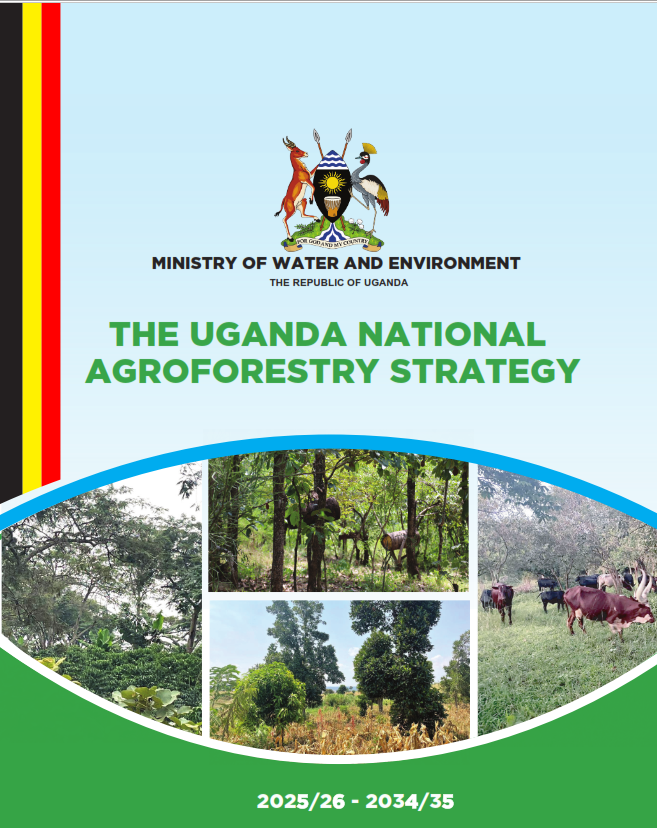
Uganda National Agroforestry Strategy
Agroforestry refers to a group of land use techniques that intentionally combine agricultural crops and/or animals with woody perennials (trees, shrubs, palms, and bamboo) in some kind of temporal or spatial arrangement. It is intended to enhance productivity, profitability, diversity, and ecosystem sustainability. Agroforestry, therefore contributes greatly to the success of agricultural productivity, conservation of forests, and Uganda’s economy.
Related Publications
Long-term sustainable financing mechanism for plantation forestry policy brief
Jul 2026
Consultancy services for Feasibility study on Sustainable Financing mechanism/ model for Plantation Forestry (SFMF) in Uganda under IFPA-CD project
Jul 2026
Vulnerable and Marginalized Groups Plan for the Batwa around Echuya Central Forest Reserve
Jun 2026
Revised Vulnerable and Marginalized Groups Plan for the Batwa around the Mgahinga Gorilla National Park
Jun 2026
Vulnerable and Marginalized Groups Plan for the Batwa around the Bwindi Impenetrable National Park
Jun 2026
Vulnerable and Marginalized Groups Plan for the Batwa around Semuliki National Park
Jun 2026
Tropical Forest Forever Facility (TFFF)
Mar 2026
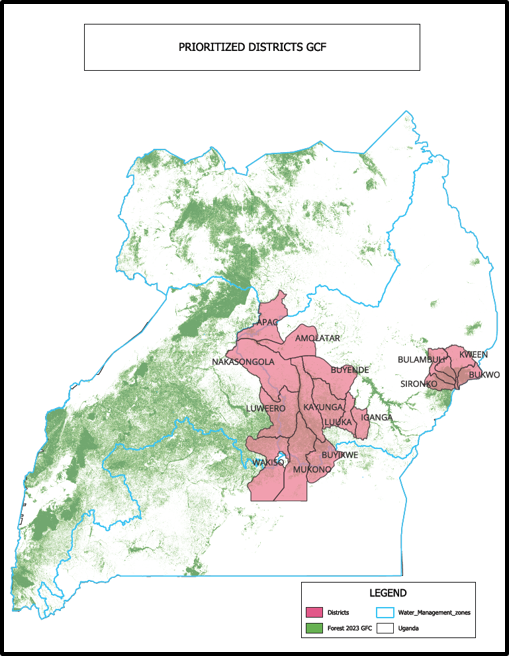
Final GCF REDD+ RBP Project_Summary_Uganda
Jan 2026
← Swipe to see more →