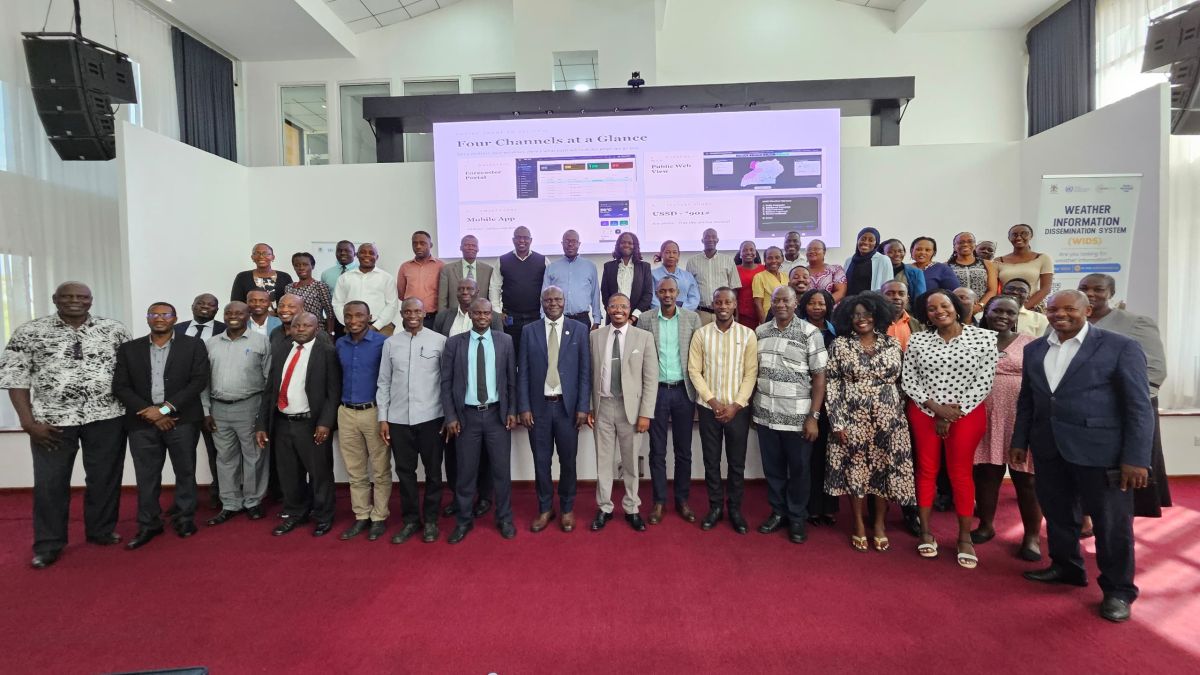
The Ministry of Water and Environment through the Department of Meteorological Services has launched a new Early Warnings initiative aimed at transforming weather forecasts into actionable early warnings to mitigate disaster risks across the country.
Dubbed the WISER ActionFirst Africa Project, the initiative was unveiled at the end of July at the Ministry headquarters in Luzira, Kampala, by Dr. Bob Alex Ogwang, the Commissioner for the Department of Meteorological Services (DMS), who represented the Permanent Secretary, Dr. Alfred Okot Okidi.
Speaking at the launch, Dr. Ogwang highlighted that the project will revolutionize weather and climate services into socially inclusive, people-centered tools that prompt immediate action.
"Accuracy of forecasts alone doesn't save lives, but action does. This initiative will bridge the gap between technical data and real-time community response," Dr. Ogwang stated, commending international partners including the UK Met Office, the World Meteorological Organisation (WMO), and the Foreign, Commonwealth & Development Office (FCDO).
Stakeholders Speak Out
The launch brought together representatives from government ministries, civil society, the private sector, academia, and development partners.
Fionne Marshall, representing the UK Met Office, urged stakeholders to focus on the direct impact of weather events on vulnerable communities rather than just delivering raw data.
Similarly, Dr. Joshua Ngaina from the WMO emphasized the need for timely, accessible communication channels, reaffirming their commitment to work closely with the ministry and the Office of the Prime Minister.
Highlighting the impact on agriculture, Dr. Isaac Mugume Assistant Commissioner Forecasting Services noted that early preparedness for climate hazards - such as floods, landslides, droughts, and heatwaves - is essential for safeguarding food security and infrastructure.
"When we prepare for major climate risks, we protect water sources and boost agricultural productivity while minimizing economic losses," Dr. Mugume explained, outlining risk knowledge, monitoring, and dissemination as the core pillars of an effective early warning system.
Other experts, including Dr. Martin Brown Munene and Dr. Sammy Ole Ouinyiaku, called for consistent messaging, evidence-based implementation, and strong legal frameworks to support anticipatory action.
Dr. Godwin Ayesiga, speaking on behalf of the DMS leadership, closed the event by thanking partners for their continued collaboration in strengthening Uganda's disaster-risk management.
About the WISER ActionFirst Project
*Purpose* : Co-designed by the UK Met Office and global partners, the initiative aims to empower communities to take life-saving steps in response to severe weather and climate change.
Co-Production : Participating countries will receive funding to conduct inclusive workshops bringing together government agencies, experts, media, and affected communities.
Key Outputs : The national process will produce actionable deliverables, including risk-mapping prototypes, clear communication channels, and a comprehensive national Action-Based Forecasting (ABF) roadmap.